NAMIBIA
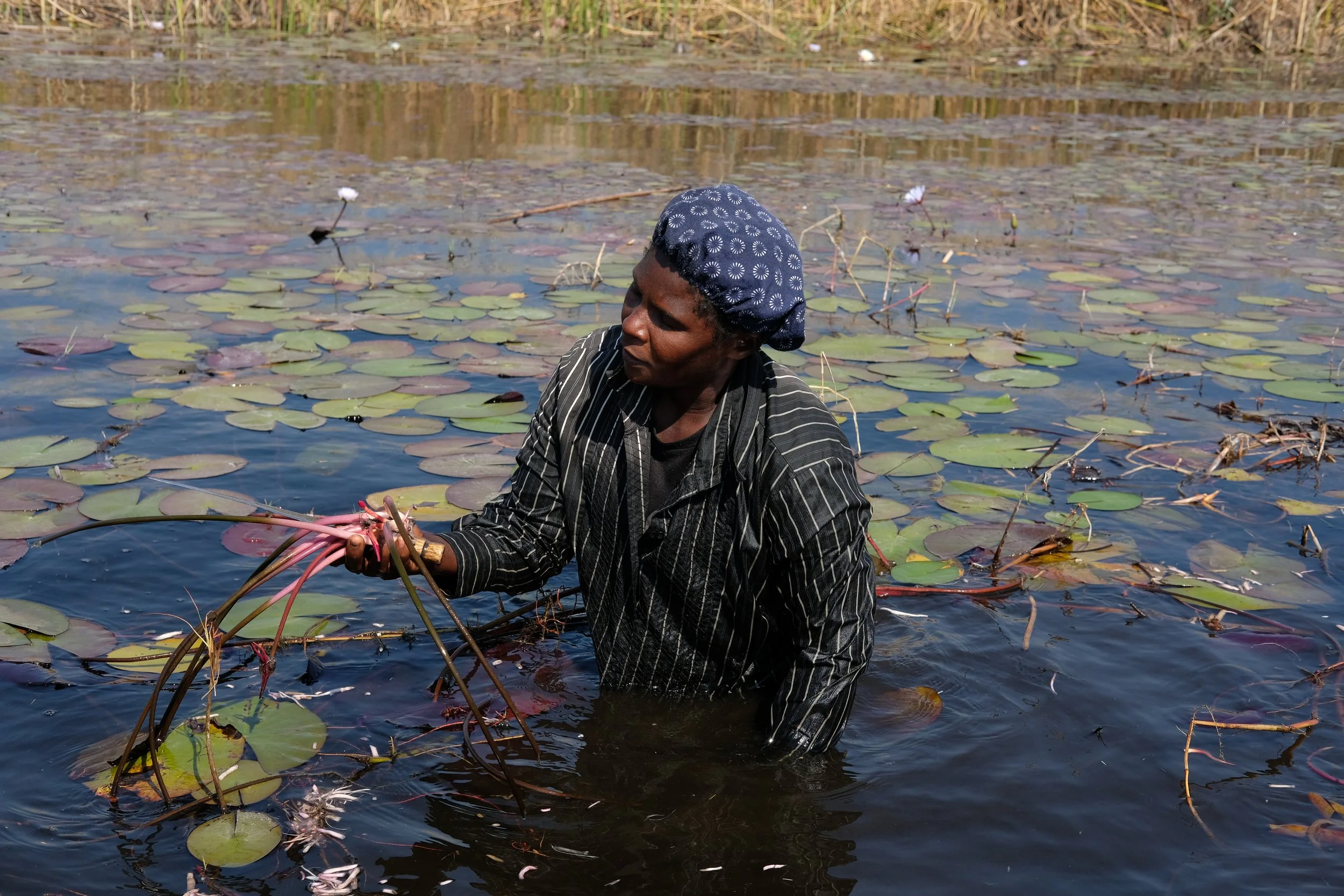
Astridah Sitoboha harvesting mwedye – waterlilies – in Balyerwa Conservancy, north-eastern Namibia. (Photo: Jessica Lavelle)
The traditional foodways of the Mayeyi (Yeyi or BaYei) of north-western Botswana and north-eastern Namibia are deeply embedded in the wetland ecosystems of the Okavango and Kwando rivers and their associated seasonal islands, channels and floodplains. The Mayeyi migrated to the area in the 1700s and prior to colonisation daily practices and food systems centred around fishing, hunting, foraging and floodplain farming. From the early 1900s, the Mayeyi were systematically relocated away from their riverine settlements in colonial attempts to control tsetse fly for commercial cattle farming and promoting nature conservation in the latter half of the 1900s. These relocations inland profoundly impacted riverine traditional foodways, limiting access to fishing and hunting grounds and the harvesting of water lilies and other riverine plants. Nonetheless, the Mayeyi’s entanglements with zishwi (fish), mwedye (waterlilies), misisi (a type of reed) and other riverine species remain resilient.
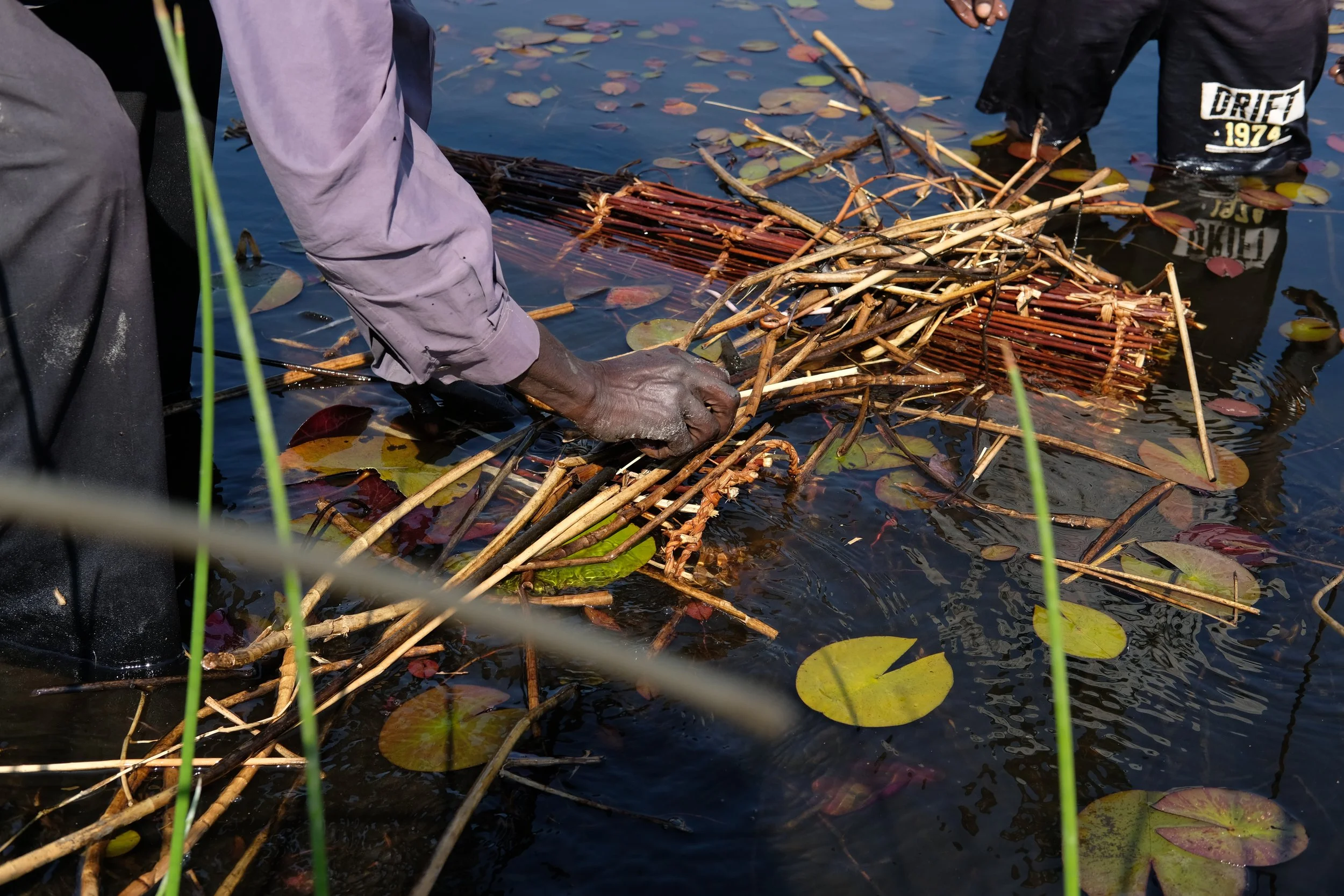
Kafura and mudziba fish traps made from branches. (Photo: Jessica Lavelle)
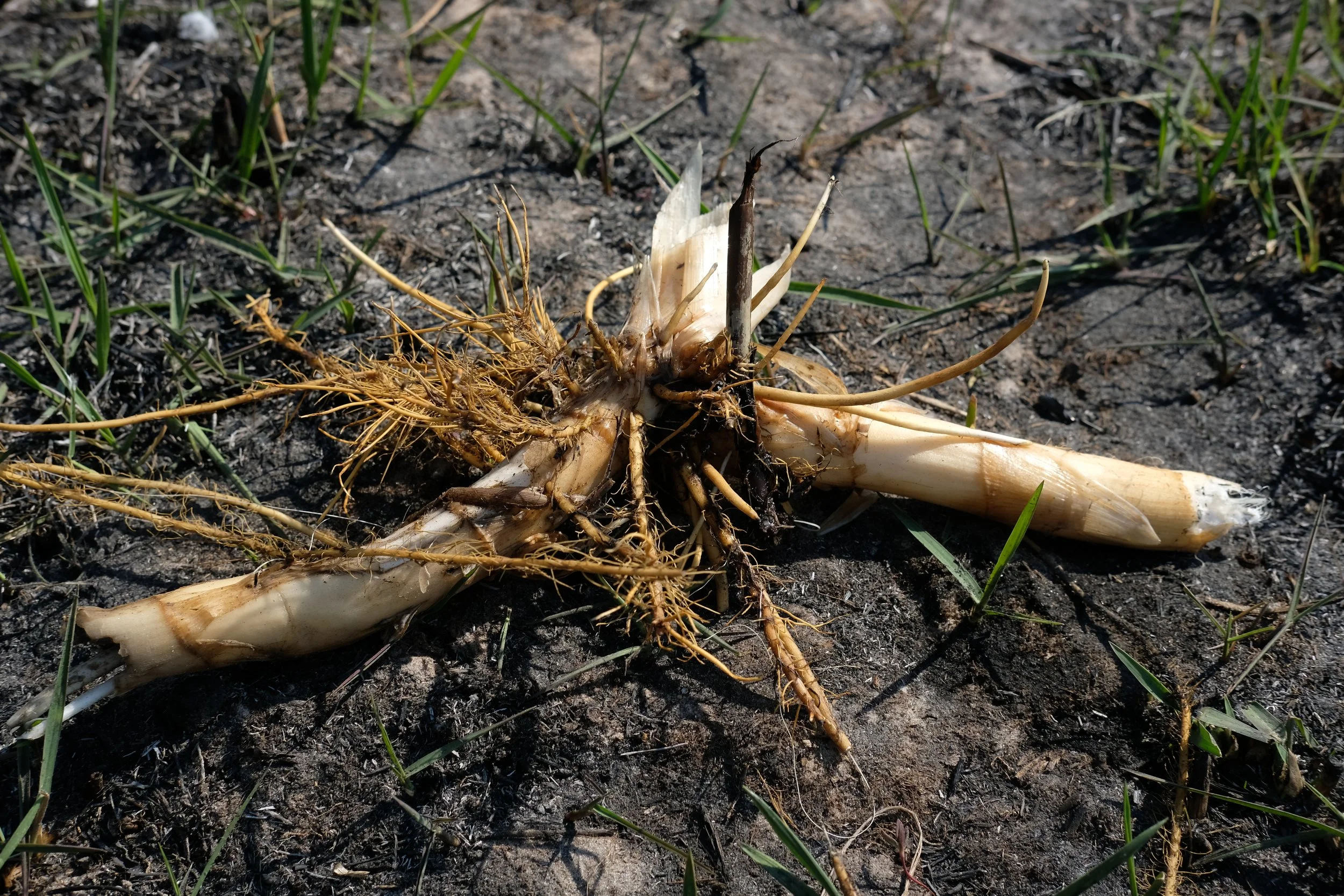
Misisi, a root harvested from a type of reed. (Photo: Jessica Lavelle)
Our Work
There is a long-standing research relationship with the residents of Balyerwa Conservancy and the proposed activities serve to complement research that was undertaken as part of a postdoctoral fellowship. This research and these activities serve to shift attention from the species favoured by trophy hunting and tourism to those that hold socio-cultural and livelihood value to the Mayeyi but have been largely overlooked. The aim is to promote more equitable governance of conservation areas through collaborative research that engages the voices, knowledges and values of community members whose cultures and livelihoods are interwoven with the landscape and to support recuperation of the Mayeyi riverine foodways.
Specific activities include:
Qualitative data collection through interviews and focus groups, and fishing, foraging and basket weaving documentation.
Development of accessible products including videos and booklets to complement the research in a format for advocacy and awareness that can be community-owned.
Mayeyi Cultural Days at local schools for elders, parents and community members to share their knowledge with the youth, including preparation of traditional foods, making of traditional fish traps, baskets, skirts, singing and dancing.
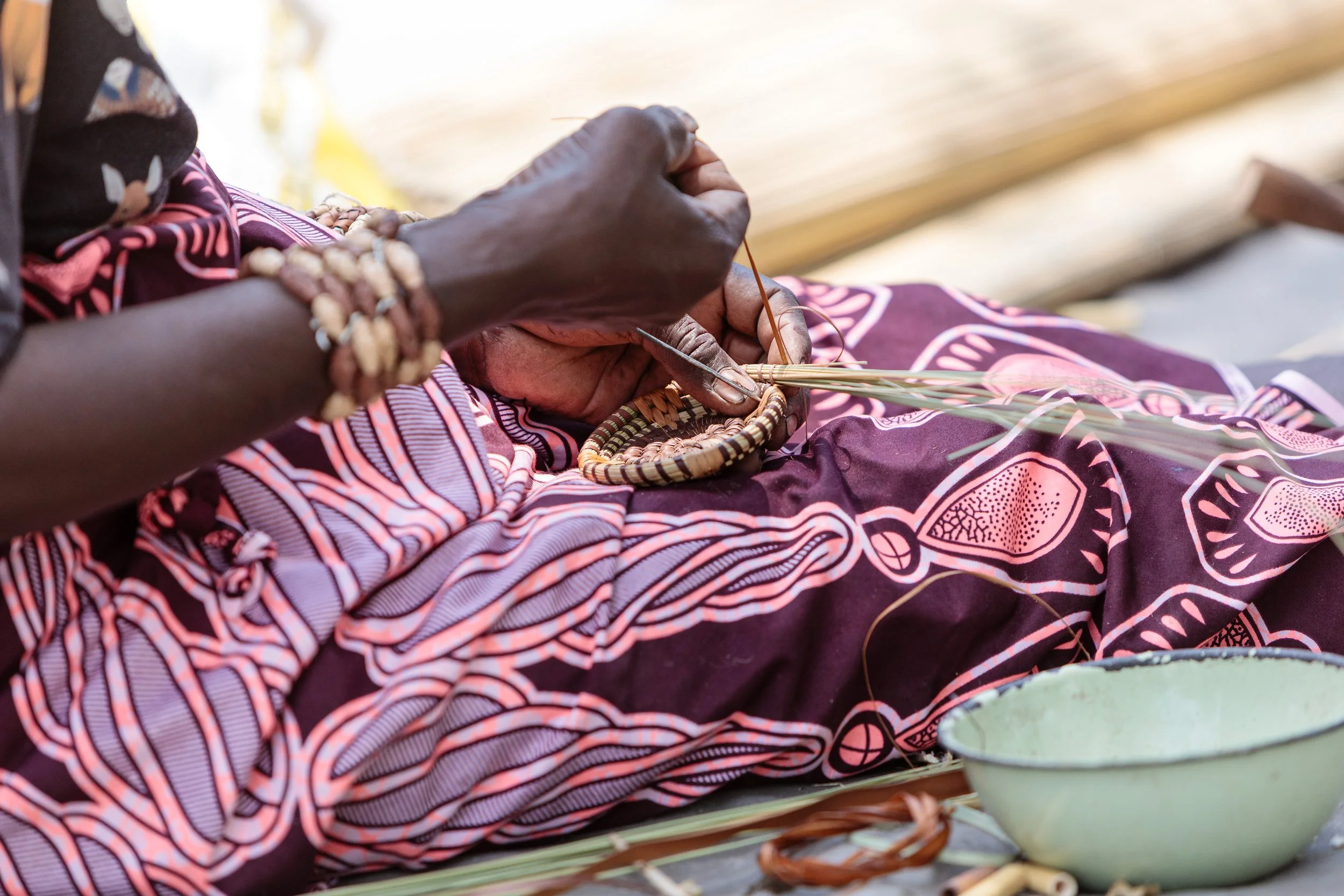
Cultural Day at Mukorufu Primary School. (Photo: Le Roux van Schalkwyk)
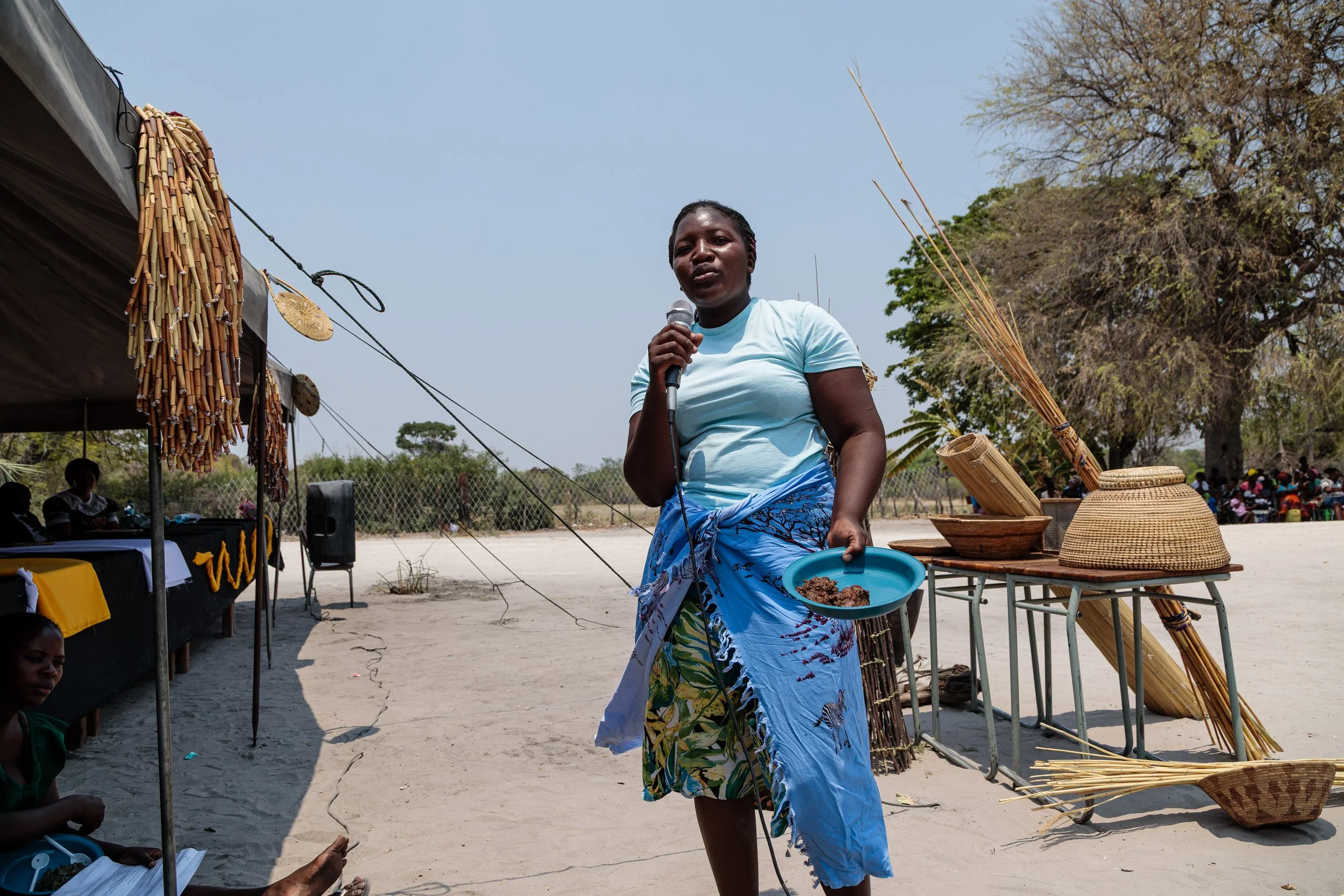
Cultural Day at Lyanshulu Primary School. (Photo: Le Roux van Schalkwyk)
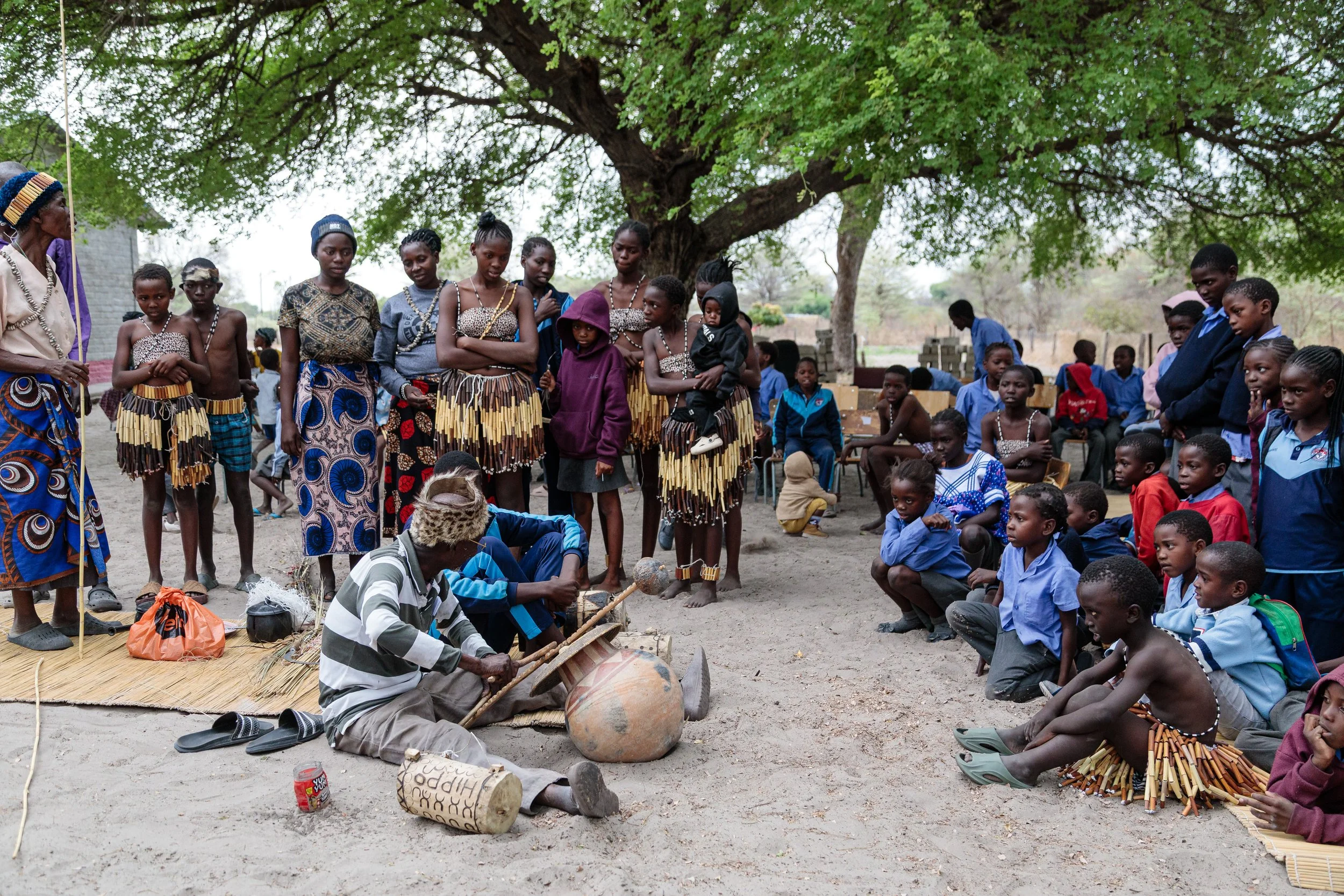
Cultural Day at Mbambazi Primary School. (Photo: Le Roux van Schalkwyk)
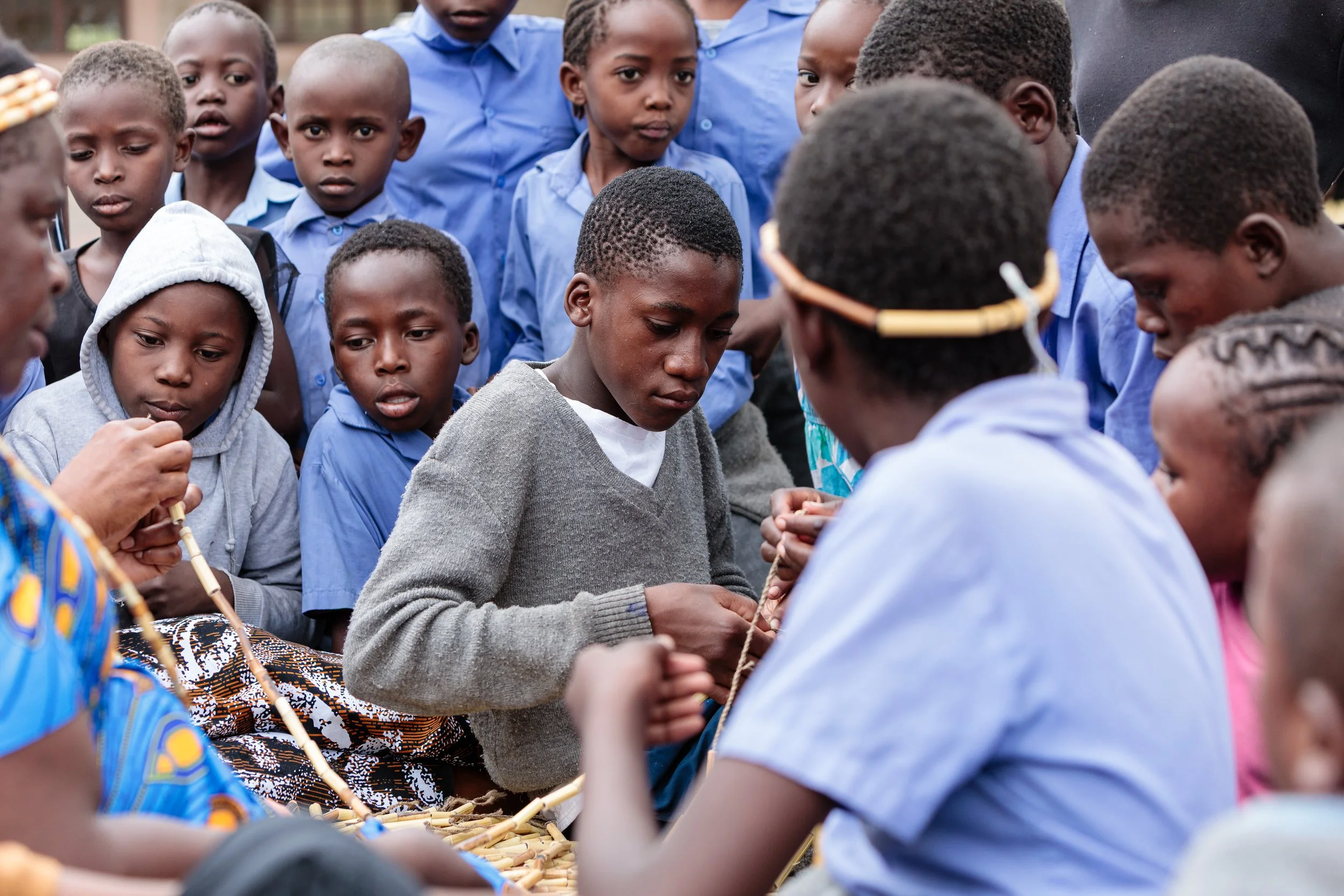
Cultural Day at Sauzuo Primary School. (Photo: Le Roux van Schalkwyk)
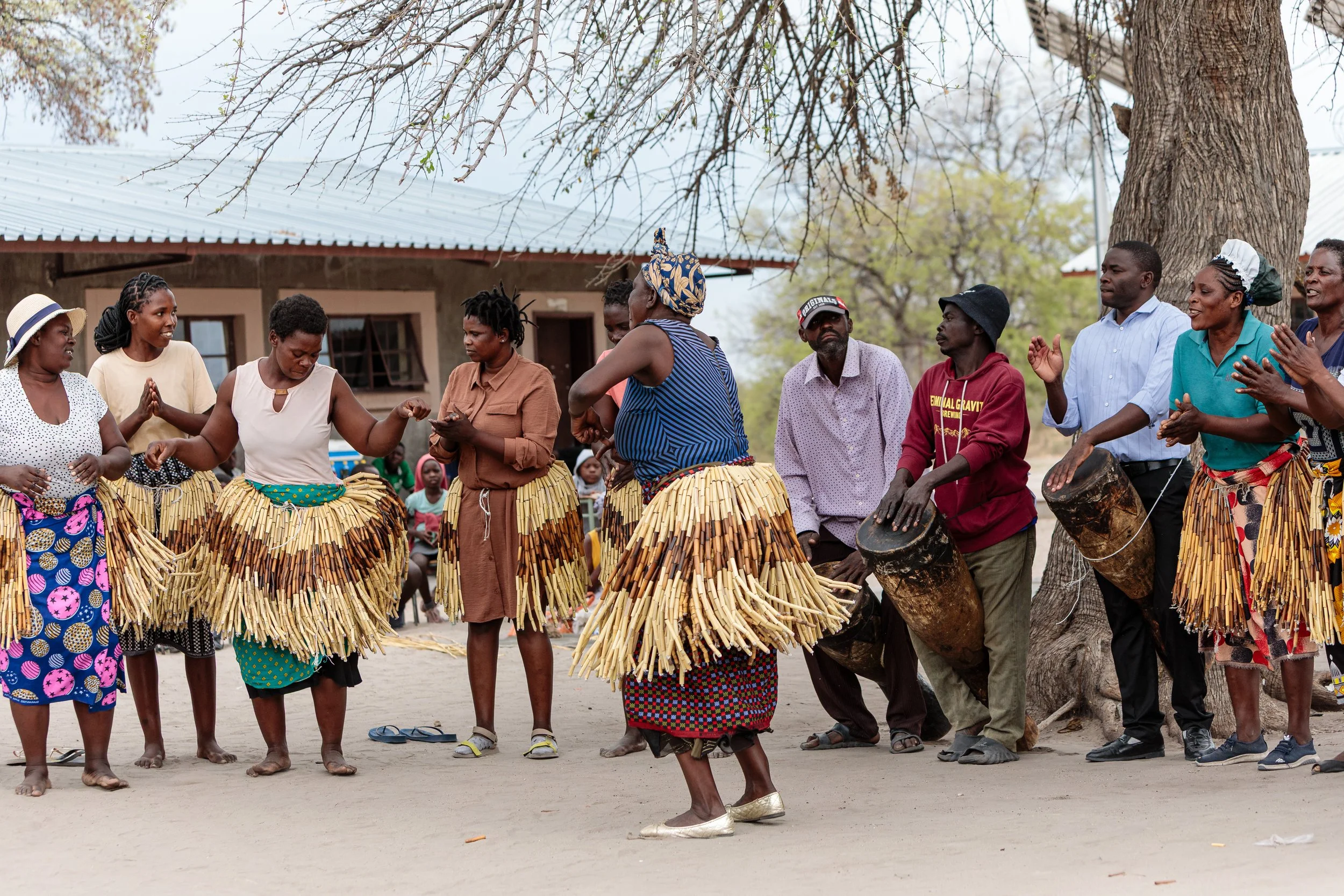
Mayeyi traditional dancing at the Sauzuo Cultural Day. (Photo: Le Roux van Schalkwyk)
Video documentation
Mwedye – The Waterlilies of Balyerwa, Namibia
Join Mayeyi fishers and harvesters from Balyerwa Conservancy in north-eastern Namibia as they take you to the Kwando wetlands to share their traditional practice of harvesting and preparing waterlilies – mwedye – cooked with fish and meat. Interwoven with songs and dance of the Mayeyi, the video highlights the joyful resilience in sustaining cultural practices and traditional foodways disrupted by colonialism and facing ongoing threats.
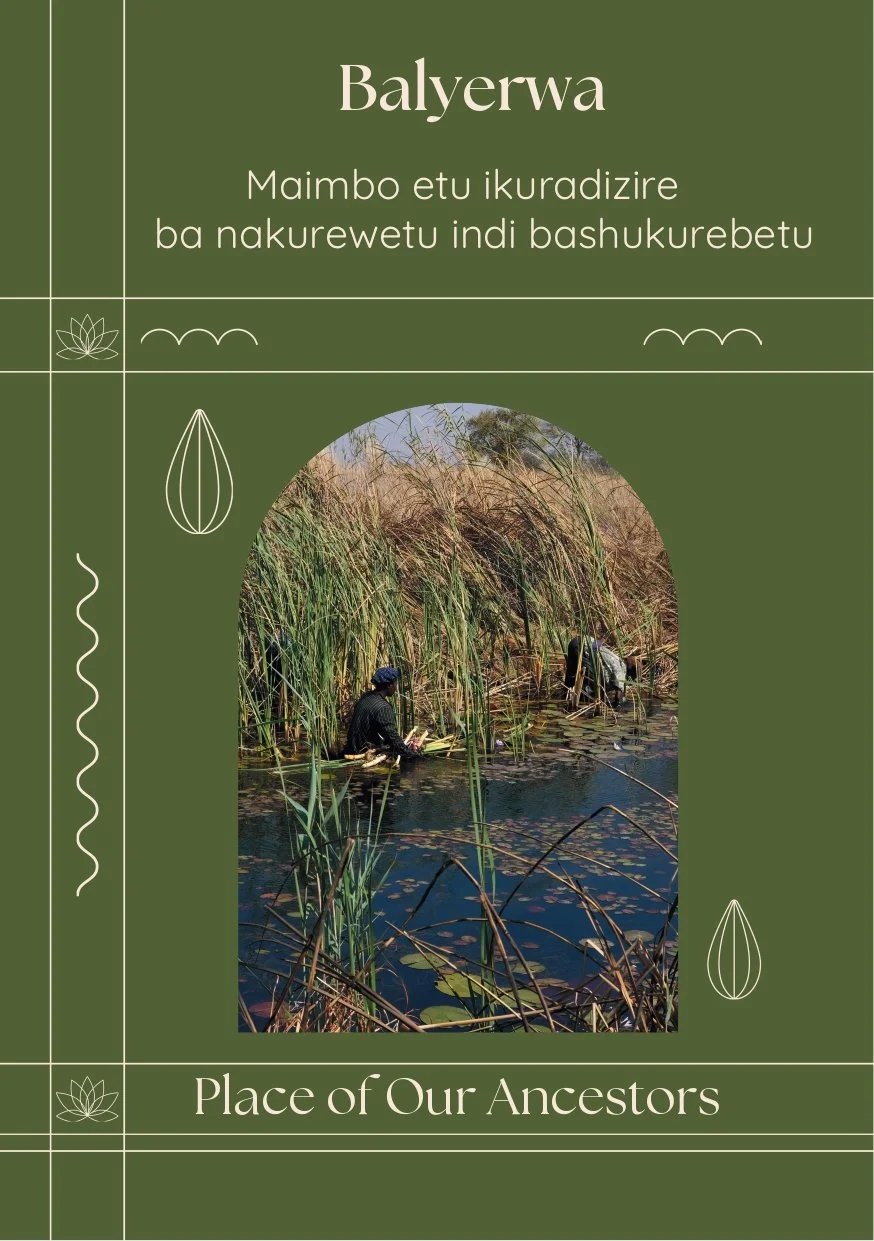
Balyerwa - The Place of Our Ancestors
The booklet titled Balyerwa - The Place of Our Ancestors offers a glimpse into Mayeyi culture and the SiYeyi language including revered songs, recipes, fishing practices and cultural items. It was co-created together with Mayeyi fishers, harvesters and other traditional knowledge holders from Balyerwa Conservancy. It is intended to be used both on its own and as an accompaniment to the video on waterlily harvesting and preparation for education and awareness.
Download here.
The core team
Jessica Lavelle and the Mayeyi fishers and harvesters from Balyerwa Conservancy.
Partners